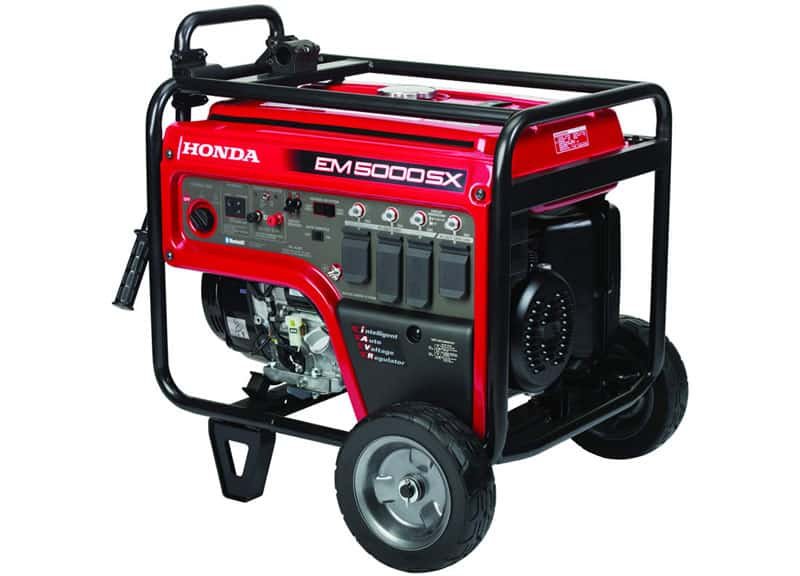
When the power goes out, or you're miles from the nearest outlet on a job site, having a reliable generator isn't just a convenience—it's a necessity. Among the myriad options, a 5000-watt Honda generator stands out as a versatile workhorse, capable of powering a surprising array of appliances and tools, from keeping your fridge cold during an outage to running essential equipment for demanding projects. This guide will dive deep into the applications and what a 5000-watt Honda generator can power, blending technical insights with practical advice so you can make informed decisions and truly understand the capabilities of these robust machines.
At a Glance: Powering Up with a 5000-Watt Honda Generator
Before we jump into the specifics, here's a quick look at what makes a 5000-watt Honda generator a popular choice for homes and worksites:
- Versatile Power Output: Delivers 5000 watts continuously, with a surge capacity of up to 7000 watts for 10 seconds, perfect for starting motors.
- Home Essentials: Easily powers refrigerators, freezers, furnace fans, sump pumps, and basic lighting.
- Everyday Comforts: Keep your microwave, coffee maker, TV, computer, and even a hair dryer running.
- Job Site Ready: Capable of handling many power tools and equipment, especially the rugged EB series.
- Honda Reliability: Equipped with powerful iGX commercial engines, known for durability and fuel efficiency.
- Advanced Features: Includes CO-MINDER™ for carbon monoxide safety, iAVR technology for stable power, and often electric start and app connectivity.
- Extended Run Time: Can run for over 10 hours at half load, making it suitable for overnight use.
Decoding "5000 Watts": More Than Just a Number
Understanding what "5000 watts" truly means is the first step to harnessing your generator's full potential. When you see a generator rated at 5000 watts, it typically refers to its rated or running wattage—the continuous power it can supply. However, generators also have a maximum or starting wattage, which is a higher power output available for a short period, usually a few seconds.
For many 5000-watt Honda models, like the EM5000SX or EB5000XK, you'll find a running output of 4500 watts (41.7/20.8A at 120/240V), with a maximum output of 5000 watts (41.2/20.8A at 120/240V). But here's where Honda's engineering shines: their exclusive iAVR (Intelligent Automatic Voltage Regulation) technology allows these generators to briefly provide an incredible 7000 watts for up to 10 seconds. This surge capability is crucial for starting equipment with high initial amp draws, like refrigerators, air compressors, or power saws, which demand a burst of extra power to get their motors spinning before settling into their lower running wattage.
So, while "5000 watts" is the headline, the ability to surge to 7000 watts temporarily significantly expands the range of applications your Honda generator can handle.
The Powerhouse in Action: What a 5000-Watt Honda Generator Truly Powers
A 5000-watt Honda generator strikes an excellent balance between portability and power, making it an ideal choice for a variety of scenarios. Let's break down its common applications.
Keeping Your Home Running During an Outage
When the grid goes down, a 5000-watt Honda can be a lifesaver, maintaining essential functions and comforts. It's powerful enough to keep critical appliances online without skipping a beat.
- Refrigerators and Freezers (Energy Star): These are often top priorities during an outage. A typical refrigerator uses 150-800 running watts, with a starting surge that the 7000-watt iAVR can easily accommodate. Freezers are similar.
- Furnace Fan (Gas or Fuel Oil): Essential for heat in colder climates. The blower fan motor typically uses 300-1000 running watts, with a surge that's well within the Honda's capacity. Note: This powers the fan, not the entire heating system, which might have more complex electronic controls.
- Sump Pump: Crucial for preventing basement flooding, especially during heavy rains that often accompany power outages. Most sump pumps require 750-1500 running watts, with a significant starting surge.
- Incandescent Lights: Keeping a few lamps on to illuminate your home is simple, with each bulb typically using 60-100 watts. LED bulbs use even less.
- Garage Door Opener: A convenience that quickly becomes a necessity when you can't manually open a heavy door. These typically use 500-1000 watts to start, then drop significantly.
Everyday Comforts and Connectivity
Beyond essentials, a 5000-watt generator can keep many of your daily routines feeling normal.
- Microwave Oven: A common appliance for quick meals, often requiring 1000-1500 watts while in use.
- Coffee Maker: Your morning ritual doesn't have to stop. A standard coffee maker uses around 800-1500 watts.
- TV / DVD Player: Entertainment or news during an outage is a welcome distraction. A modern TV typically draws 100-300 watts.
- Computer: For staying connected, working remotely, or managing vital information, your computer (desktop or laptop) and monitor will comfortably run on 100-500 watts.
- Hair Dryer: While a power-hungry appliance at 1200-1875 watts, you can run it for short periods. Just be mindful of other active loads when using high-wattage items.
Job Site & Workshop Versatility
The robust nature of Honda's 5000-watt generators, particularly models like the EB5000XK3AN with its heavy-duty frame and OSHA-compliant design, makes them perfect companions for demanding work environments.
- Power Tools: From circular saws (1500-2000W start, 1000-1500W run) and miter saws to air compressors (1500-2500W start, 750-1500W run) and drills, a 5000-watt unit can handle a range of professional-grade tools.
- Lighting: Bright work lights (e.g., halogen or LED work lights) are easily powered to extend working hours or improve safety.
- Battery Chargers: Keep your cordless tool batteries topped up throughout the day.
- Portable Heaters/Fans: Depending on the season, you can run a small electric heater (around 1500W) or powerful fans for comfort on the job.
Important Note on Simultaneous Use: While a 5000-watt generator can power many individual items, it's crucial to remember that it cannot power all of them simultaneously if their combined running wattage exceeds the generator's continuous output (4500-5000 watts). You'll need to prioritize and manage your power consumption.
Beyond the Watts: Honda's Edge in a 5000W Package
What makes a Honda 5000-watt generator stand apart isn't just the raw power, but the thoughtful engineering and features designed for reliability, safety, and ease of use. If you're looking to explore Honda 5000-watt generators, these are some of the key innovations you'll discover.
Intelligent Automatic Voltage Regulation (iAVR)
We touched on the 7000-watt surge capability, but iAVR does more than just provide a power boost. This exclusive Honda technology ensures a consistent, stable flow of power regardless of the load. Why does this matter? Stable power protects sensitive electronics like computers and modern appliances from voltage fluctuations, which can cause damage or premature wear. It means reliable performance even when multiple items are cycling on and off.
CO-MINDER™: A Breath of Fresh Air in Safety
Carbon monoxide (CO) is a silent killer, an odorless, colorless gas produced by generators. Honda's CO-MINDER™ system is a game-changer for safety. It continuously monitors CO levels near the generator and automatically shuts the unit down if detected CO levels become dangerously high. This advanced detection system provides critical peace of mind, especially when operating generators for extended periods.
Honda My Generator App + Bluetooth Capability
In our connected world, even generators are getting smart. Select Honda 5000-watt models come with Bluetooth capability and integrate with the Honda My Generator smartphone app. This allows for remote operation and monitoring right from your phone. Imagine being able to:
- Wirelessly start and stop your generator.
- Check its operating status, including power output and run time.
- Receive service reminders directly to your device.
This level of convenience means less trekking out in bad weather to check on your generator.
The Robust Honda iGX Commercial Engine: Heart of the Machine
At the core of these powerful generators is a Honda iGX series commercial engine, such as the iGX390. These intelligent, computer-controlled engines deliver optimal performance, fuel efficiency, and legendary Honda reliability. They operate automatically, simplifying controls and ensuring consistent power delivery for demanding applications.
120/240V Selector Switch: Flexibility for Your Needs
Many 5000-watt Honda generators feature a 120/240V selector switch. This allows you to choose between using both 120 and 240 Volts simultaneously or dedicating the entire generator output to 120 Volts. This flexibility is invaluable:
- 120/240V Mode: Ideal for powering a mix of standard household appliances (120V) and larger, heavier-duty equipment that requires 240V, such as well pumps or some workshop tools.
- 120V Only Mode: If you only need 120V power, this setting allows the total generator output to be available through any of the 120-volt outlets, maximizing power for multiple standard appliances.
Ease of Use & Portability
Honda designs for real-world use. Features like:
- Electric Start: (Battery included on EM5000 models) Makes starting effortless with the turn of a key, complemented by a recoil backup.
- Wheel Kit & Folding Handles: Standard on many models, these features make maneuvering and transporting the 200+ pound unit much easier. Wide, positive lock folding handles provide convenient storage.
- Fuel Gauge: A simple but essential feature, allowing you to monitor fuel levels at a glance.
Durability & Safety Features
You expect a generator to last, and Honda builds them to withstand tough conditions.
- Full Frame Protection: A sturdy, heavy-duty frame (often one-piece welded for EB models) protects the engine and components from bumps and knocks.
- GFCI Protection: Ground Fault Circuit Interrupter (GFCI) outlets are standard, protecting users from electric shock in damp or wet conditions. The EB series is designed for full GFCI protection across all outlets, meeting OSHA worksite standards.
- Honda Oil Alert®: This system automatically shuts down the engine if oil levels drop too low, preventing costly engine damage.
- Electronic Circuit Breakers: Protect the generator from being overloaded.
- USDA-Qualified Spark Arrestor/Muffler: Reduces noise and meets safety standards for use in forested areas.
- Warranty: A 3-year residential warranty (and 12-month commercial warranty) provides confidence in your investment.
Calculating Your Power Needs: How to Plan for Your 5000W Generator
To maximize your 5000-watt generator, a little planning goes a long way. The goal is to determine which appliances are essential and how to run them efficiently.
- List Your Essential Appliances: Start by writing down everything you need to power during an outage or on a job site.
- Find Their Wattage:
- Running Watts: The power an appliance needs to operate continuously. This is usually listed on the appliance's data plate or in its manual.
- Starting (Surge) Watts: The momentary spike in power needed to start electric motors. This can be 2-3 times the running wattage. If not listed, you can often find common appliance starting wattages online.
- Prioritize and Add Up:
- Add up the running watts of all the items you want to power simultaneously. This sum should not exceed the generator's rated wattage (typically 4500-5000W).
- Identify the item with the highest starting wattage. When you start that item, the total running watts of everything else plus that one item's starting watts must not exceed the generator's maximum surge wattage (7000W for Honda iAVR).
Example Scenario (Home Backup):
Let's say you want to run: - Refrigerator (Energy Star): 700 Running Watts / 2200 Starting Watts
- Furnace Fan: 800 Running Watts / 1500 Starting Watts
- Sump Pump: 1000 Running Watts / 2000 Starting Watts
- LED Lights (5 bulbs): 50 Running Watts / 50 Starting Watts
- TV: 150 Running Watts / 150 Starting Watts
- Laptop: 100 Running Watts / 100 Starting Watts
Strategy:
- Always On (Running): Refrigerator, LED Lights, TV, Laptop = 700 + 50 + 150 + 100 = 1000 Running Watts. (Well within 4500W rated capacity).
- Peak Demand (Starting): The highest starting surge is from the Sump Pump (2000W). If the Sump Pump starts while the other items are running:
- Current Running Load: 1000W
- Sump Pump Starting Load: 2000W
- Total Momentary Load: 1000W (running) + 2000W (sump pump start) = 3000W.
- This is well within the 7000-watt iAVR surge capacity.
- Managing Larger Loads: If you then want to run the Microwave (1500W running) or a Hair Dryer (1800W running), you would need to temporarily turn off another high-wattage item (like the furnace fan or sump pump if not actively needed) to stay within the 4500-5000W running capacity.
Getting Started: Setting Up and Maintaining Your Honda 5000-Watt Generator
Once you have your generator, proper setup and maintenance are crucial for safe and reliable operation.
Safe Placement is Paramount
Never operate a generator indoors or in a partially enclosed space, even with windows or doors open. Generators produce carbon monoxide, and proper ventilation is critical.
- Outdoor Only: Always place the generator outdoors in a well-ventilated area.
- Away from Openings: Position it far away from windows, doors, and vents to prevent exhaust fumes from entering your home or other buildings.
- Stable Surface: Place it on a firm, level surface.
- Weather Protection: While designed for outdoor use, protect it from direct rain or snow with a generator tent or canopy, ensuring adequate airflow around the unit.
- Clearance: Maintain at least 3-5 feet of clearance around the generator for proper ventilation and to prevent fire hazards.
Fueling Up
- Fresh Gasoline: Always use fresh, unleaded gasoline. Stale fuel can cause engine problems.
- Full Tank: Fill the tank before an outage, or when you know you'll need extended run time. The 6.2-gallon tank on a Honda 5000-watt model can provide over 10 hours of run time at half load.
- Never Refuel Hot: Allow the generator to cool down completely before refueling to prevent fire hazards.
Starting Your Generator
- Electric Start: If your model has electric start (like the EM5000SX), simply turn the key. Ensure the battery is charged.
- Recoil Start: For models with recoil start (like the EB5000XK) or as a backup, follow the instructions: turn the fuel valve on, set the choke, turn the engine switch on, and pull the recoil rope firmly.
- No Load Start: It's best practice to start the generator with nothing plugged in. Once it's running smoothly, you can begin connecting your appliances.
Regular Maintenance for Longevity
Like any engine, your generator requires routine maintenance to perform its best and last for years.
- Oil Changes: Check the oil level before each use and change it according to the manufacturer's schedule (e.g., after the first 20 hours, then every 100 hours or annually).
- Air Filter: Clean or replace the air filter regularly, especially in dusty conditions.
- Spark Plug: Inspect and replace the spark plug as recommended.
- Fuel System: If storing for an extended period, drain the fuel tank or use a fuel stabilizer to prevent gumming and corrosion.
- Battery Check: For electric start models, ensure the battery terminals are clean and the battery is charged.
Common Questions & Smart Answers
Can a 5000-watt generator run my central air conditioning?
Generally, no. Most central air conditioning units require significantly more starting and running watts than a 5000-watt generator can provide. Small window AC units (5000-10000 BTUs) might run, but larger central systems (2-3 tons) often need 7,000-15,000 starting watts and 3,000-5,000+ running watts, quickly exceeding the generator's capacity, even with the iAVR surge.
How long will a Honda 5000-watt generator run on a tank of fuel?
A Honda 5000-watt generator with a 6.2-gallon fuel tank (like the EM5000SX or EB5000XK) can run for approximately 7.1 hours at rated load and an impressive 10.5 hours at half load. This makes it excellent for overnight power needs.
Is a 5000-watt Honda generator loud?
Honda generators are generally known for their quieter operation compared to many competitors. The EM5000SX, for example, operates at 66 dB(A) at rated load and 63 dB(A) at 50% load. For comparison, 60 dB(A) is about the sound level of normal conversation, and 70 dB(A) is like a vacuum cleaner. While not silent, they are designed to be manageable.
What's the main difference between the Honda EM5000 and EB5000 models?
The primary distinction lies in their intended application and features. The EM5000SX is designed more for residential backup and general-purpose use, featuring electric start, the Honda My Generator app, and a slightly lower noise level. The EB5000XK is built for industrial worksites and demanding environments, emphasizing ruggedness, OSHA compliance (including full GFCI protection), and a heavy-duty frame. While both deliver similar power output, the EB model focuses on job site durability and safety standards.
Making the Most of Your Power Investment
A 5000-watt Honda generator is a powerful and reliable asset, whether it's providing peace of mind during a power outage or enabling productivity on a remote job site. By understanding its capabilities, carefully planning your power needs, and adhering to safe operating procedures, you can ensure it serves you effectively for years to come. Invest in quality accessories like heavy-duty extension cords and consider a transfer switch for a safer, more convenient home backup solution. With a Honda, you're not just buying a generator; you're investing in proven performance and legendary reliability.