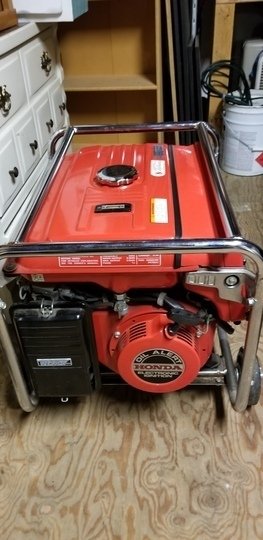
Choosing a Honda 5000-watt generator isn't just about buying a piece of equipment; it's about investing in peace of mind, reliable power, and a commitment to quality. This comprehensive Buying Guide: Choosing Your Honda 5000 Watt Generator is designed to cut through the jargon and help you find the perfect model for your home, job site, or next adventure. You're looking for dependability, fuel efficiency, and quiet operation—and that's exactly what Honda delivers in this popular wattage range.
At a Glance: Your Quick Takeaways
- Why Honda? Renowned for durability, fuel efficiency, and quiet operation in the 5000-watt class.
- Typical Uses: Ideal for home backup essentials, outdoor events, construction sites, and small business power.
- Key Models: Look out for the Honda EB5000X and EM5000SX in this range.
- Price Tag: Expect to invest around $3,000 to $3,600 upfront, a reflection of Honda's premium quality.
- Smart Features: Prioritize inverter technology for sensitive electronics and CO-MINDER® sensors for critical safety.
- Long-Term Value: While pricier upfront, Honda generators offer lower lifetime costs due to exceptional longevity and reduced maintenance needs.
- Where to Buy: Authorized Honda dealers offer the best support; home improvement stores and online platforms can have deals, but verify authenticity.
The Heart of Reliability: Why a Honda 5000-Watt Generator?
When the power goes out, the last thing you want is a generator that sputters or fails. That's where Honda steps in, particularly with its 5000-watt models. Across the United States, these generators have earned a sterling reputation as a top choice for home backup, outdoor events, and demanding job sites. Their appeal isn't just marketing hype; it's built on a foundation of proven durability, remarkable fuel efficiency that keeps them running longer, and an impressive quiet operation that won't disrupt your peace.
A 5000-watt generator hits a sweet spot for many users. It's powerful enough to handle essential household appliances during an outage—think refrigerators, sump pumps, and lights—yet often more portable and manageable than larger, industrial-grade units. This balance of power and practicality makes it an incredibly versatile workhorse.
Meet the Workhorses: Popular Honda 5000-Watt Models
Within Honda's impressive lineup, two models frequently stand out in the 5000-watt category: the EB5000X and the EM5000SX. While specific features can vary slightly by year or retailer, these models consistently embody the core Honda strengths: robust construction, reliable engines, and user-friendly designs.
The "EB" series typically caters to professional and rental markets, often emphasizing durability for rigorous use. The "EM" series, with its "S" or "SX" designation, often incorporates advanced features such as electric start for easier operation, making them a favorite for homeowners seeking convenience. When comparing these, consider not just the wattage, but also the specific features like starter type, outlet configurations, and safety enhancements to match your exact needs.
Powering Your World: Figuring Out Your Wattage Needs
Before you even look at models, the most critical step is understanding what you need to power. A 5000-watt generator is capable, but it's not unlimited. You'll need to calculate both starting wattage (the surge of power an appliance needs to kick on) and running wattage (the power it needs to operate continuously).
Here's a simple approach:
- List Your Essentials: Make a list of all the appliances and tools you absolutely need to run simultaneously. This might include your refrigerator, freezer, a few lights, a sump pump, a TV, a computer, or even certain power tools on a job site.
- Find the Wattage: Look for the wattage rating on the appliance's data plate or in its owner's manual. If you only see amps and volts, multiply them (Volts x Amps = Watts).
- Identify Starting Watts: Motorized appliances (refrigerators, pumps, air conditioners) require a brief surge of starting wattage, which can be 2-3 times their running wattage. Account for the highest starting wattage item you'll run.
- Total It Up: Add the running wattage of all items you want to power, plus the single highest starting wattage of any appliance. This total will give you a good estimate for your minimum generator size.
Example Scenario:
- Refrigerator (running): 800W, (starting): 2000W
- Sump Pump (running): 1000W, (starting): 2500W
- Lights (total): 500W
- TV/Modem: 300W
If you need the sump pump AND refrigerator to start: The highest starting wattage is the sump pump at 2500W. Add the running watts of all other items: 800W (fridge) + 500W (lights) + 300W (TV/modem) = 1600W.
Total required = 2500W (highest starting) + 1600W (other running) = 4100W.
A Honda 5000-watt generator would provide a comfortable buffer in this scenario, allowing you to cycle these larger loads without overloading the unit.
Features That Power Your Decision
Beyond raw wattage, modern generators come packed with features designed to enhance performance, safety, and convenience. When choosing your Honda 5000-watt generator, pay close attention to these key aspects:
Power Quality: The Appeal of Inverter Technology
Not all watts are created equal. Traditional open-frame generators produce "dirty" power, which can be inconsistent. While fine for power tools or basic appliances, sensitive electronics like laptops, smartphones, or modern refrigerators require "cleaner," stable power.
This is where inverter technology shines. Honda's inverter generators deliver electricity with minimal total harmonic distortion (THD), making it safe for even the most delicate devices. If your primary use involves powering electronics or variable-speed appliances, an inverter model is a non-negotiable feature, even if it adds to the cost. It’s an investment in protecting your valuable equipment.
Safety First: CO-MINDER® Carbon Monoxide Sensors
Safety should always be paramount when operating a generator. Carbon monoxide (CO) is a colorless, odorless, and deadly gas. Honda has taken a leading role in generator safety with its innovative CO-MINDER® sensors. These sensors continuously monitor CO levels in the generator's operating area. If dangerously high levels are detected, the generator automatically shuts down, protecting you and your family.
For any home use, or when operating in even partially enclosed spaces (like a garage with the door open, which is still risky), a generator equipped with CO-MINDER® is an essential safety feature that could literally save lives. Don't compromise on this.
Portability and Practical Design
A generator is meant to be moved, at least occasionally. Consider models designed for easy transport. Look for:
- Wheel Kits: Integrated or optional wheel kits make it significantly easier to maneuver the generator, especially on varied terrain.
- Folding Handles: Sturdy, ergonomic handles that fold away for compact storage are a big plus.
- Frame Design: A robust, roll-cage frame protects the engine and components, and also provides convenient grab points.
Even if your generator will primarily stay in one spot, the ability to easily move it for maintenance or storage is invaluable.
Fuel Efficiency and Runtime: Keeping the Power On Longer
Honda generators are celebrated for their fuel efficiency, which translates directly into longer runtimes and lower operating costs. Pay attention to:
- Fuel Tank Size: A larger fuel tank means fewer refueling stops, extending your continuous power supply during long outages or workdays.
- Fuel Consumption Rates: While not always explicitly listed in simple terms, look for manufacturer specs that indicate how many hours the generator will run at a certain load on a full tank. This varies, but Honda's commitment to efficient engine design generally yields impressive numbers.
- Fuel Type: Most 5000-watt Honda generators run on gasoline. Factor in the availability and storage of fuel.
Higher fuel efficiency and larger tanks contribute to a higher upfront price but offer significant savings and convenience over the generator's lifespan.
Noise Levels: A Sound Choice for Your Environment
Generators can be noisy, but Honda has made significant strides in noise reduction. If you're using the generator for residential backup, camping, or outdoor events, noise levels are a critical consideration.
- Inverter Models: Generally, inverter generators are much quieter than conventional open-frame models because their engines can throttle down to match the power demand, rather than constantly running at full speed.
- Decibel Ratings: Look for the decibel (dB) rating in the specifications. For context, 60 dB is roughly the sound of normal conversation, while 70-80 dB can be intrusive. A lower dB rating is always better for comfort and neighborly relations.
A quieter generator means less disruption, whether you're trying to sleep through an outage or enjoy the tranquility of nature while camping.
The Investment: Understanding Honda's Pricing and Long-Term Value
Let's talk numbers. The upfront price of a Honda 5000-watt generator typically ranges around $3,000 to $3,600. This is a significant investment compared to some other brands, but it's important to understand why and what you're getting for that price.
What Drives the Price?
Several factors contribute to the cost:
- Advanced Features: As discussed, inverter technology and critical safety features like CO-MINDER® sensors add to the manufacturing complexity and, therefore, the price. These aren't just bells and whistles; they're performance and safety enhancements.
- Fuel Efficiency and Technology: Honda's engines are engineered for superior fuel consumption and extended runtime. This advanced design and material quality contribute to a higher initial cost.
- Purchase Location: Prices can fluctuate depending on where you buy. Authorized Honda dealers often have consistent pricing but may offer added value in service. Large home improvement stores might have seasonal sales, and online platforms can be competitive, but always confirm seller authenticity.
Cost of Ownership: A Long-Term Perspective
While the initial sticker price might seem steep, a Honda generator is often a more economical choice over its lifetime. The total cost of ownership extends beyond the purchase price to include:
- Maintenance: Routine oil changes, air filter replacements, and spark plug servicing are necessary. Honda units are known for their robust design, which often translates to fewer unexpected repairs.
- Fuel: As a major operating cost, Honda's fuel efficiency means you'll spend less on gasoline over the years compared to less efficient models.
- Repairs: While no machine is immune to wear and tear, Honda generators have a reputation for exceptional longevity and reliability, leading to reduced repair frequency and costs.
This longevity means your initial investment pays dividends over many years, potentially making the lifetime cost of a Honda comparable to, or even lower than, cheaper alternatives that require more frequent repairs or consume significantly more fuel. For many, this reduced stress and guaranteed performance is well worth the premium. A generator's value isn't just in its price tag, but in its ability to reliably provide power when you need it most. You can dive deeper into the full value proposition with a comprehensive Honda 5000 watt generator guide.
Where to Purchase Your Power Partner
The decision of where to buy your Honda 5000-watt generator is almost as important as which model you choose. Each option offers different benefits:
- Authorized Honda Dealers: This is often the safest bet. Dealers provide genuine Honda products, honor warranties without hassle, and offer expert advice, servicing, and replacement parts. They are also your go-to for customer support.
- Large Home Improvement Stores (e.g., Home Depot, Lowe’s): These retailers often stock popular Honda variants and can offer competitive pricing, especially during seasonal sales events. While convenient, staff expertise might vary, and their service departments may not be Honda-specific.
- Online Platforms (e.g., Amazon): Online marketplaces can present the most competitive pricing due to lower overheads. However, vigilance is key. Always verify the seller's authenticity and clearly understand their warranty and return policies. Buying directly from a recognized dealer's online store is often safer than from third-party sellers.
- Specialized Generator and Power Equipment Retailers: These stores offer the best of both worlds: competitive pricing and specialized knowledge. Their staff are usually experts, capable of providing detailed advice, installation services (for transfer switches), and ongoing maintenance support.
Regardless of where you buy, always register your generator with Honda and keep your purchase receipts for warranty purposes.
Beyond the Honda Horizon: Considering Alternatives
While this guide champions Honda, it's fair to acknowledge that other brands offer 5000-watt generators, often at a lower price point. Brands like Champion, Westinghouse, and Generac typically range from $1,000 to $2,000 for a similar wattage.
However, this lower price usually comes with trade-offs. While these alternatives can provide adequate power, they may lack Honda's renowned:
- Fuel Efficiency: Leading to higher long-term operating costs.
- Noise Reduction: Often running louder, which can be a significant drawback for residential or recreational use.
- Long-Term Reliability and Durability: Honda's engineering and build quality typically mean fewer breakdowns and a longer operational lifespan.
When evaluating alternatives, it's crucial to compare more than just the price tag. Dive into feature sets, warranty terms, and critically, user reviews. Look for feedback on engine longevity, part availability, and real-world performance under various loads. For critical applications, the initial savings on a cheaper alternative might not outweigh the peace of mind and performance of a Honda.
Real-World Power: Common Uses for a 5000-Watt Generator
The versatility of a Honda 5000-watt generator makes it an indispensable tool for a variety of scenarios:
- Home Backup Power: During power outages, it can reliably run essential household appliances. This typically includes your refrigerator, a sump pump to prevent flooding, a few lights, a TV, and perhaps a microwave or coffee maker. It won't power your entire home with central AC, but it keeps life comfortable and critical systems running.
- Camping and Outdoor Events: From powering an RV's necessities (lights, small appliances, even some AC units) to providing electricity for food trucks or outdoor concerts, a 5000-watt unit offers robust portable power. Its quiet operation (especially inverter models) is a huge bonus here.
- Construction Sites: Where grid power is non-existent or unreliable, these generators supply the consistent power needed for corded power tools, lighting, and small air compressors. Their durable build is well-suited to the demands of a job site.
- Small Businesses: For businesses that cannot afford even a momentary power disruption—such as small offices, clinics, or food service—a 5000-watt generator can keep critical systems running, preventing data loss, spoiled inventory, or lost revenue.
Understanding these common uses helps contextualize the value and application of such a robust power source.
Your Next Steps: Making the Smart Choice for Power Confidence
Choosing your Honda 5000-watt generator is a decision that impacts your preparedness, convenience, and peace of mind for years to come. You're not just buying a machine; you're investing in a legacy of reliability and performance.
To summarize your journey to the right generator:
- Pinpoint Your Power Needs: Accurately calculate the starting and running wattage of everything you need to power. Don't guess.
- Prioritize Key Features: Decide if inverter technology is a must for sensitive electronics. Absolutely prioritize CO-MINDER® for safety. Consider portability, fuel efficiency, and noise levels based on your primary use.
- Evaluate the Long-Term Value: Look beyond the initial purchase price to the total cost of ownership, factoring in Honda's legendary durability and lower maintenance needs.
- Choose Your Retailer Wisely: Opt for authorized dealers for warranty and service peace of mind, or be cautious when buying from online platforms.
Armed with this knowledge, you're ready to make an informed decision and confidently bring home a Honda 5000-watt generator that will serve you reliably for years to come.